
Cloth pads
Stay cool even during your period.
Cloth menstrual pads may seem like a step back a few decades to some. However, the number of women preferring this menstrual product has been steadily growing recently.
Cloth pads are a great eco-friendly and health-conscious addition during menstruation, whether used with a menstrual cup or disposable menstrual products. You can also use them throughout your entire period—it’s entirely up to you and what feels most comfortable.
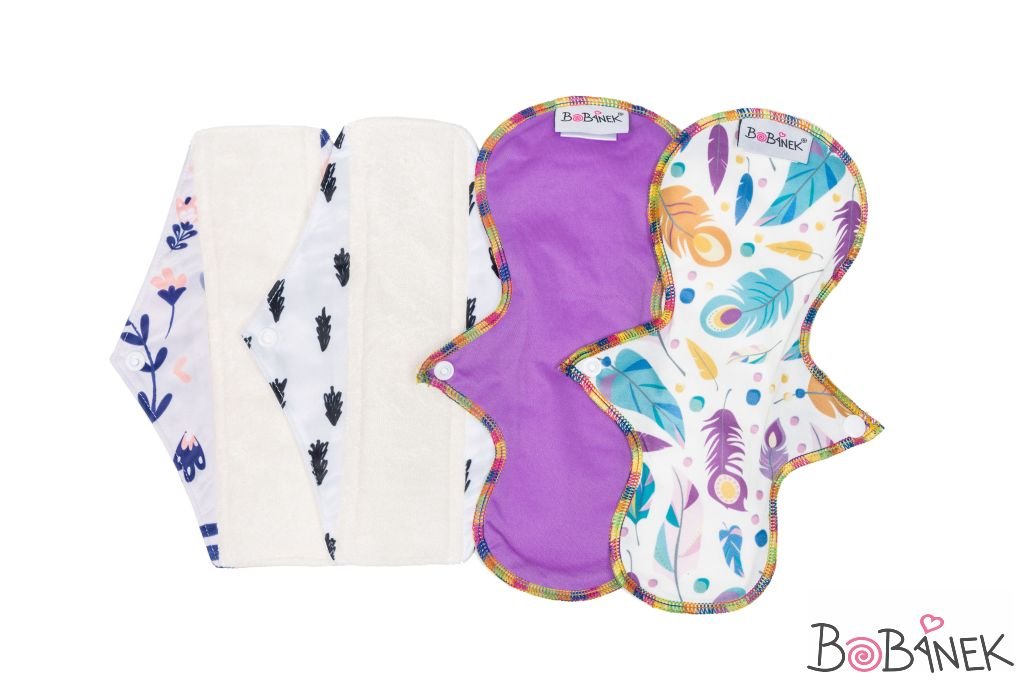
They are made from various materials, such as bamboo viscose, polyester fleece, organic cotton, and more. You can choose from a wide range of designs and several types:
- Intimate – suitable to use with a menstrual cup or, toward the end of your period, with or without a PUL layer
- Daytime – for light to heavy flow, with or without a PUL layer
- Nighttime – for light to heavy flow, with or without a PUL layer; longer than daytime cloth pads
- Postpartum – longer cloth pad without a PUL layer

Why use cloth pads instead of disposable products? There are several reasons:
- They are eco-friendly – Being washable, they can be reused over and over, reducing the amount of waste you create.
- They are healthier – They contain no gels, deodorizing additives, bleach residues, gelling agents, chemicals, or fragrances.
- They are more economical – They are available at reasonable prices, and you don’t need to buy disposable products every month.
- They are breathable – They prevent unpleasant odors, and with regular changing, you can avoid intimate health issues.
- They are fun – There’s an incredible variety of patterns on the market, so you won’t know which one to choose first, and you can even get a stylish pouch to keep your cloth pads handy at all times.

How many pads should you get to start with, and how do you take care of them?
Every woman is different, and menstrual flow varies in intensity. It’s a good idea to get several types of cloth pads so you can always use the one best suited to your flow. For daytime, having 2–6 pads is recommended.
Most cloth pads fasten with snaps. The system is similar to winged disposable pads—except instead of sticking the wings to the underwear, you snap the cloth pad in place.
Change your cloth pads as often as you would your regular pads. After use, you can hand-wash them with bile or core soap and then wash them all together in the washing machine (with your other laundry) at 60°C. This temperature is high enough to kill bacteria. After washing, it’s best to dry the pads on a drying rack. Dryer or radiator drying is not recommended, as it damages the PUL layer and shortens the pad’s lifespan.
Combining a menstrual cup with cloth pads
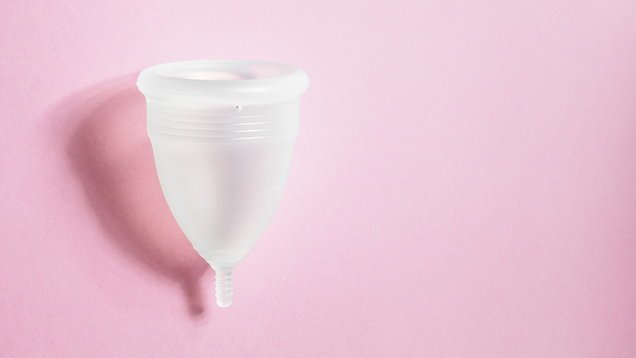
A menstrual cup is a modern and eco-friendly product designed for repeated use during your period. It is made from medical-grade silicone. There is a wide variety of cups available on the market from different brands, usually in two sizes, and several criteria help you choose the cup that “fits” you best:
- Your age
- Whether you have given birth
- How active you are in sports
- The position of your cervix during menstruation
- The heaviness of your flow
The cup is very flexible and soft, adapting to the vagina of every woman. Thanks to the suction created when it attaches to the vaginal walls, blood collects in the cup. Depending on the flow, it is important to remove and empty the cup every 4–12 hours, wash it, and reinsert it. After your period, the cup should be boiled in water to prepare it for the next cycle. A menstrual cup lasts for at least 5 years.
In conclusion
On average, a woman uses about 11,000 disposable products over her lifetime, which can be quite costly. In contrast, investing in cloth pads pays off within a few months, saving both your wallet and—most importantly—the environment.
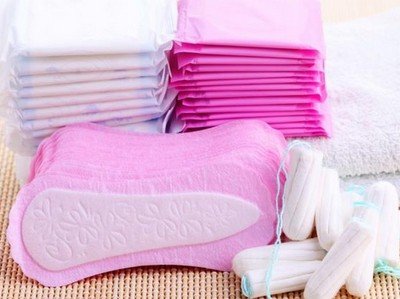
Advantages and disadvantages of disposable pads:
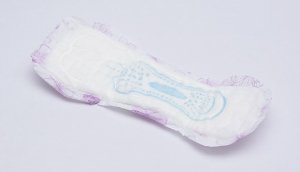
Pros and cons of disposable pads:
Pros:
- You’re not introducing a foreign object into your body.
- It’s easy to check whether the pad needs to be changed.
- They are more physiological, not interfering with your body.
Cons:
- They create non-biodegradable waste, which overwhelms our planet.
- They are non-breathable and treated with chemicals, creating an environment for bacteria.
- They can produce an odor.
- You cannot go swimming in a pool or at a water park while wearing them.
Pros and cons of tampons:

Pros and cons of tampons:
Pros:
- Once inserted, they are discreet.
- Suitable for any type of sport.
- Helps prevent odors.
Cons:
- Risk of toxic shock syndrome.
- Can dry out the vaginal lining, disrupting the natural vaginal environment.
- Creates non-biodegradable waste.
- Not everyone finds tampons comfortable; you may feel it inside your body.
Pros and cons of a menstrual cup:
Pros:
- Once inserted, it is discreet.
- The risk of yeast infections is reduced thanks to the smooth surface of the cup, which prevents bacteria from sticking.
- Only needs to be emptied every 12 hours—morning and evening (depending on menstrual flow).
- A one-time investment that lasts at least 10 years.
- Eco-friendly: after use, it is washed and reinserted.
Cons:
- Requires some pelvic floor strength to prevent the cup from slipping.
- It may take some time for some women to learn how to insert it properly.
- Not suitable for all types of sports.