
Caring for cloth diapers
We’re often asked how to care for cloth diapers—how to wash and dry them so they last as long as possible. We’ve put together everything that will make working with diapers easier for you. It’s very simple, so let’s take a look together.
Before first use
Once you receive your order from us, we recommend washing the diapers. With each subsequent wash, their absorbency will increase.
Diaper changing
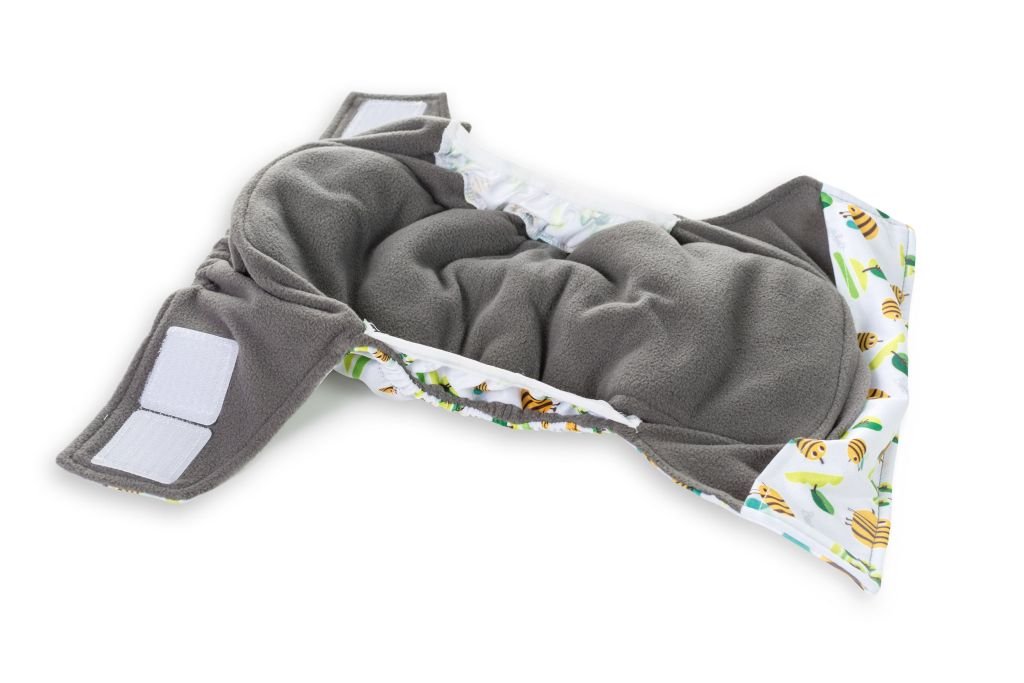
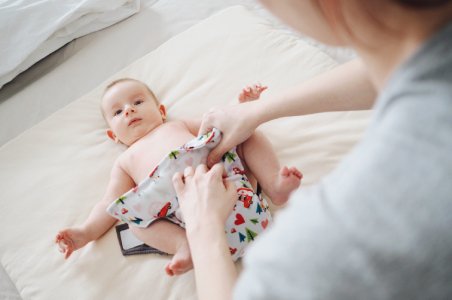
When changing diapers, we recommend using a liner. Place one liner in the diaper to catch stool, which you can then dispose of together with the liner—this makes handling the diaper much easier.
Always use a liner when applying diaper cream to your baby’s bottom. Diaper creams can be water-repellent, which could unintentionally coat the inside of the diaper and reduce its absorbency.
Storing diapers
Store used diapers in a dry place, ideally in a waterproof Bobánek bag or in a sealable bin/bucket. You can rub a few drops of essential oil on the inside of the lid to prevent odors from spreading. Store diapers this way for a maximum of 2–3 days before washing them.
When going on a trip or a walk, a great helper for storing diapers is a waterproof Bobánek bag made from PUL material, which is breathable yet leak-proof, ensuring no odors escape from the bag.
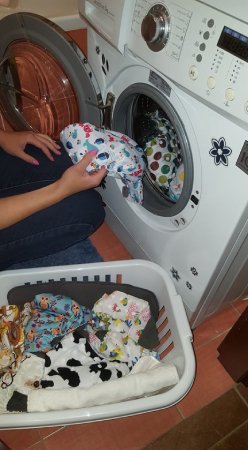
Washing diapers
Take the diapers out of the bin and place them in the washing machine. We recommend separating dark fleece diapers (insert and all-in-one diapers) from the rest of the laundry. For diapers with Velcro, make sure the Velcro is fastened to the so-called “anti-Velcro” to prevent dirt from sticking in the wash and to avoid shortening the diaper’s lifespan.
Ideally, start with a rinse cycle first, then set the wash to 60 °C, which is the temperature needed to kill all bacteria.
Detergent:
A regular laundry powder is ideal for washing.
Avoid eco-friendly detergents or detergents with a high soap content. Unfortunately, these can coat fleece diapers, making them water-repellent, which prevents them from absorbing liquid properly.
Water-repellent diaper vs. properly washed diaper
We are testing and looking for a suitable eco-friendly detergent that doesn’t cause this problem. We know that Tierra Verde and Feel Eco make diapers water-repellent, so please avoid using these detergents.
Currently, we have tested Denkmit Nature laundry gel for colored clothes and can highly recommend it! The hypoallergenic Frosh Eco Baby laundry gel for infant clothes has also worked very well for us.
The water-repellent effect on diapers is reversible. If it happens, simply clean your washing machine and wash the diapers a few times with a suitable detergent. If you encounter any washing issues, don’t hesitate to contact us—we’re happy to help.
Keep in mind that diapers are very absorbent, so to wash them properly, do not overload the washing machine; fill it to a maximum of half its drum capacity.
Do not use fabric softener, as it also reduces absorbency and makes diapers water-repellent.
Drying diapers
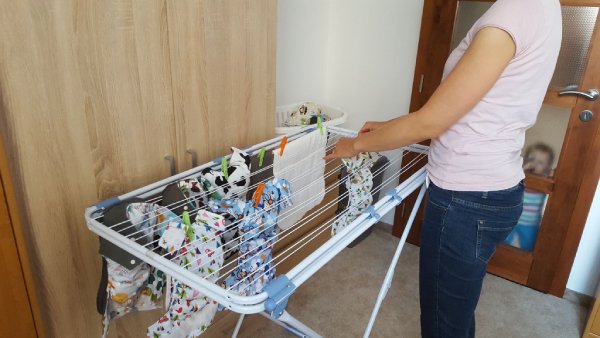
After washing, hang the diapers on a drying rack. Thanks to the fleece and PUL materials used in the diapers, they dry very quickly—right out of the washing machine, they are almost dry. However, PUL does not like high temperatures, as its membrane could be damaged, so avoid drying diapers in direct sunlight or near radiators. The same applies to tumble dryers. Insert diapers, prefolds, and cloth diapers without PUL can be safely dried in a dryer.
Once the diapers are dry, you can fold and store them. Ironing is no longer necessary today, as bacteria are already eliminated during washing, and ironing could damage the snaps and PUL material.