
First baby foods food we are tasting
Time flies. Your little crumbs were just born, and now it’s already the time when they start reaching for the plate you’ve just prepared for lunch. Little eyes are watching the fork with a piece of food make its way to your mouth. It’s fascinating. They want to try it too.
When and how to start?
Every baby is completely different, so the timing for starting first complementary foods can vary. The World Health Organization recommends waiting until around 6 months before introducing solids. Some mothers start earlier, around 4 months, usually following the advice of a pediatrician. Other babies show little interest in food and may start later. It is very individual, but in general, if your baby shows interest in food and signs of readiness, you can begin introducing complementary foods gradually.
The gag reflex
One sign of readiness for solid food is that the baby has lost the gag reflex. All babies are born with it, which causes them to push out anything that isn’t liquid like milk. If you offer your baby a spoonful of puree and they push it out with their tongue, they are not yet ready for solid food. Mothers often mistake this reflex for the baby simply disliking the puree or food and continue offering it. In this case, it is better to wait and try offering the food again in a week or two.
What food should you offer first?
On the internet, you can find plenty of recommended charts showing which foods to start with and how to introduce them gradually. Of course, these recommendations vary widely, as they are influenced by the creators’ dietary habits and experiences. Some suggest starting with carrots, while others strongly advise against them due to the risk of digestive issues. One source recommends pureeing, while another prefers the BLW (Baby-Led Weaning) method.
It’s a good idea to clarify how you want your baby to eat and which method you want to follow.
In the end, it doesn’t need to be overly complicated. Just buy the foods you’re used to and offer something suitable to your baby. Introduce major allergens gradually and avoid unhealthy, heavily processed foods. Otherwise, you can offer your child almost anything.
Feeding with a spoon or BLW
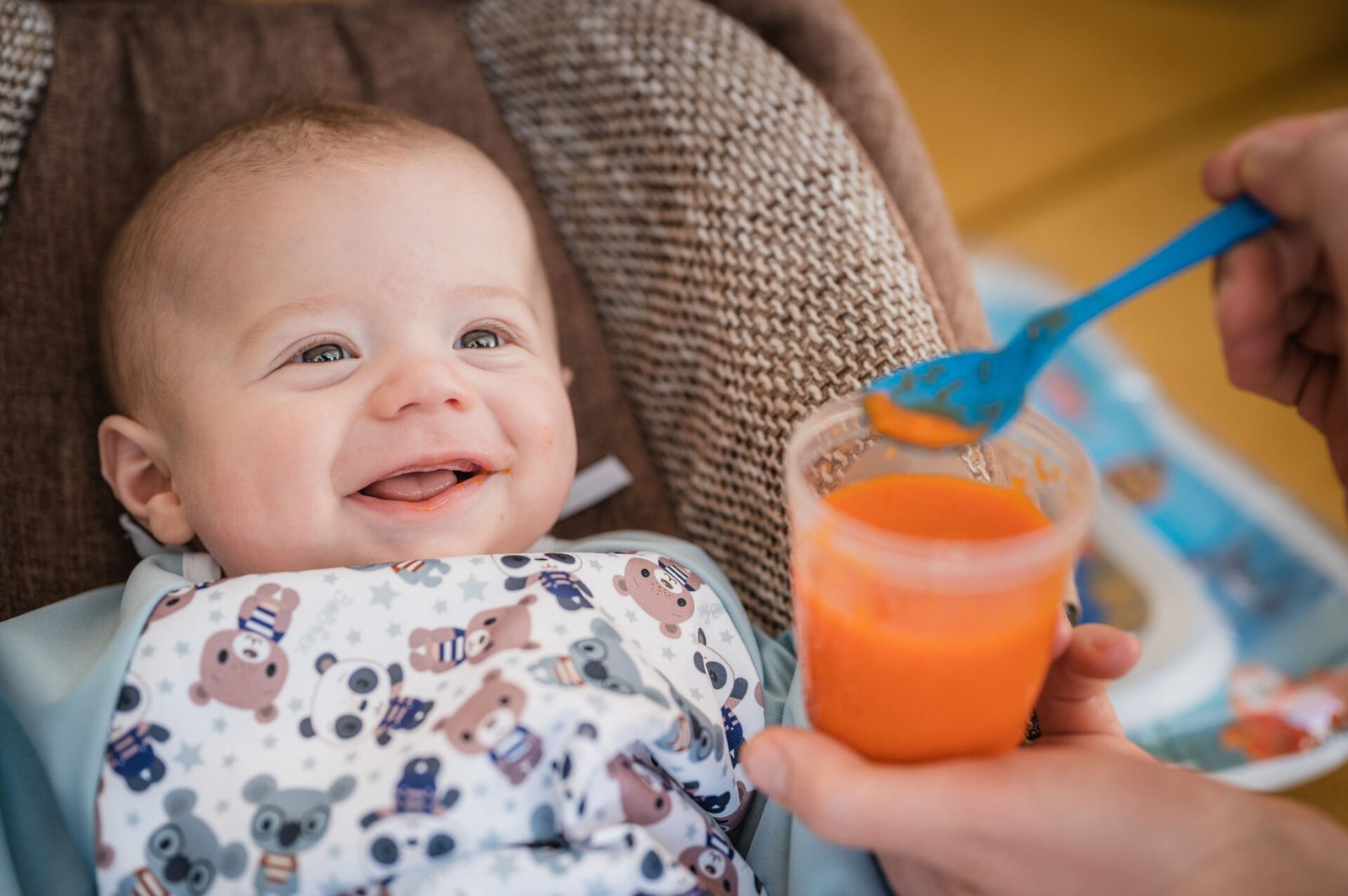
You have probably come across these two methods of introducing complementary foods. Feeding with a spoon using pureed food is the classic method, where you cook vegetables, fruits, or meat in water or steam, puree them, and then feed your baby with a spoon.
The BLW (Baby-Led Weaning) method, in contrast, is led by the baby. The parent’s role is only to offer appropriately prepared and safe foods for the baby to explore—not just the taste, but also the texture and smell. The food is not pureed but served, for example, cut into sticks or later into small pieces. Of course, it should first be softened to a safe texture to prevent choking.
With BLW, the baby eats the same food as the parents, so it’s important that the family eats healthily and dines together as often as possible. Babies have a great view of their parents and learn by imitation. If you are interested in this method, it is recommended to read some literature (for example, I Know What I Like) or get more detailed information from a qualified professional.
What to do with all that mess?
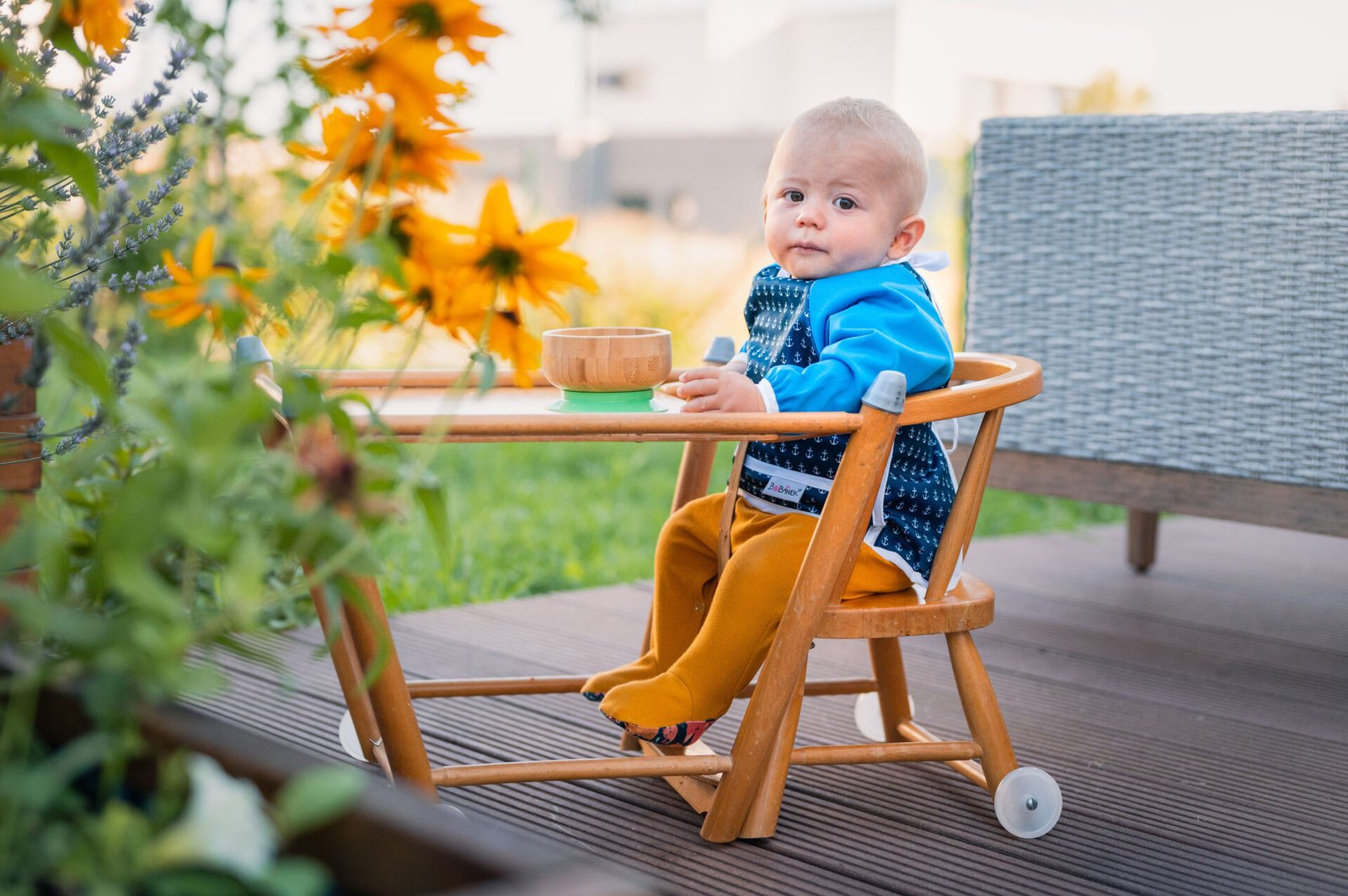
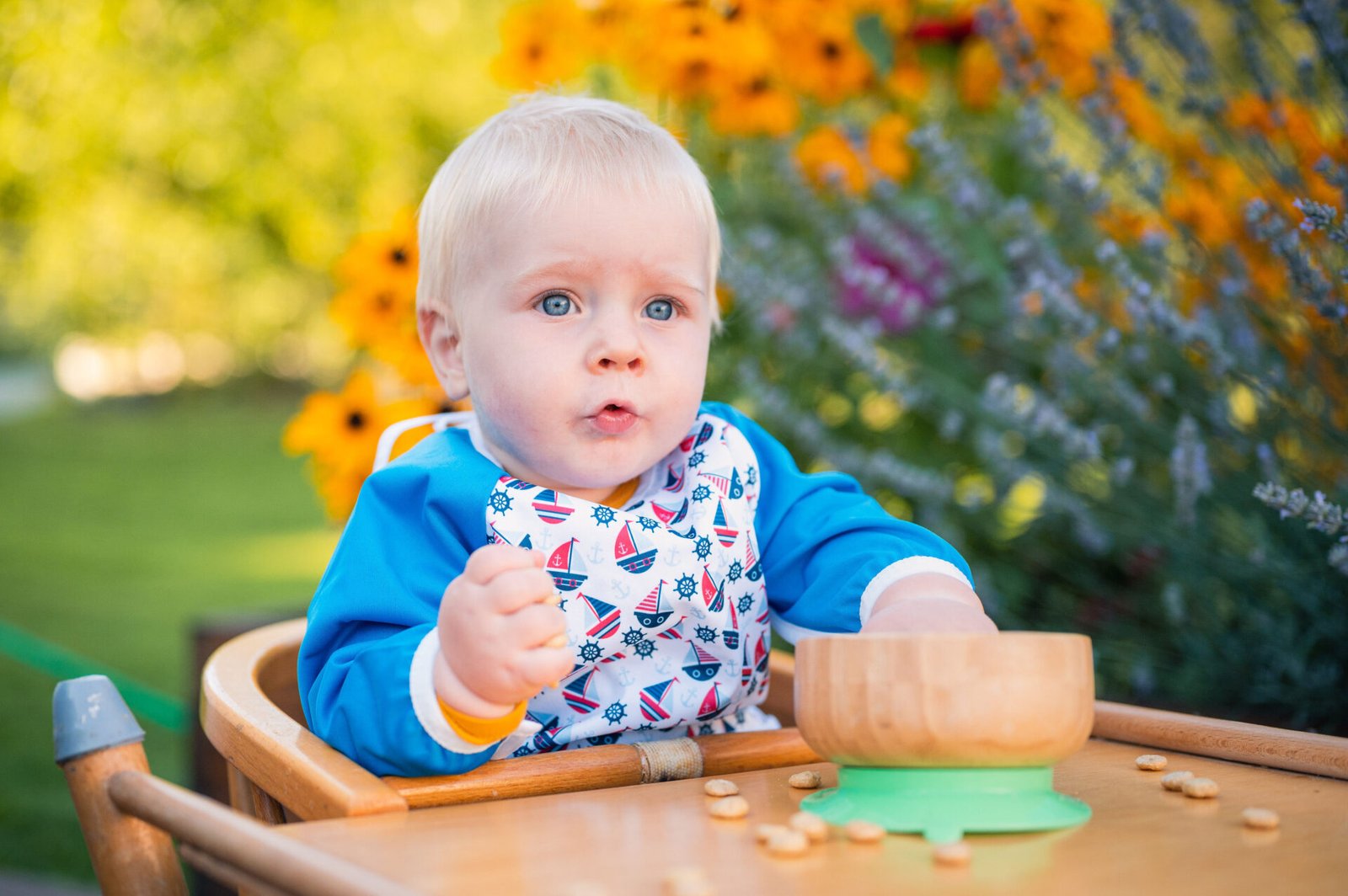
No matter which method you choose, know that introducing solids inevitably comes with a mess. Under the table, on the table, around the table—babies often end up covered from head to toe in their (un)favorite food. Don’t worry; you’ll soon find your own way to manage it.
Bibs can be a big help. They won’t clean up for you, but they at least catch what would otherwise end up on the floor or on pants. If you choose a bib with a pocket, it will even catch food that falls from the baby’s mouth or hands. We offer long-sleeved bibs with pockets in various cute patterns. They are waterproof and protect your baby’s upper body from getting dirty.
To make things even easier at the start, you can simply dress your baby in just a diaper during meals, then change and wash them afterward.
In conclusion, I would like to add that every baby is unique and has a different appetite. Some babies immediately dive in with enthusiasm and put everything offered by their parents into their mouths. Others are more cautious and tend to play with food rather than actually eat it.
Be patient. As long as your baby is thriving, don’t pressure them to eat or create tension around mealtime, as this could lead to a food refusal.
Enjoy the time spent together at meals and create an atmosphere of calm and acceptance.